
Current Carrying Capacity
Current Carrying Capacity and Cable Selection
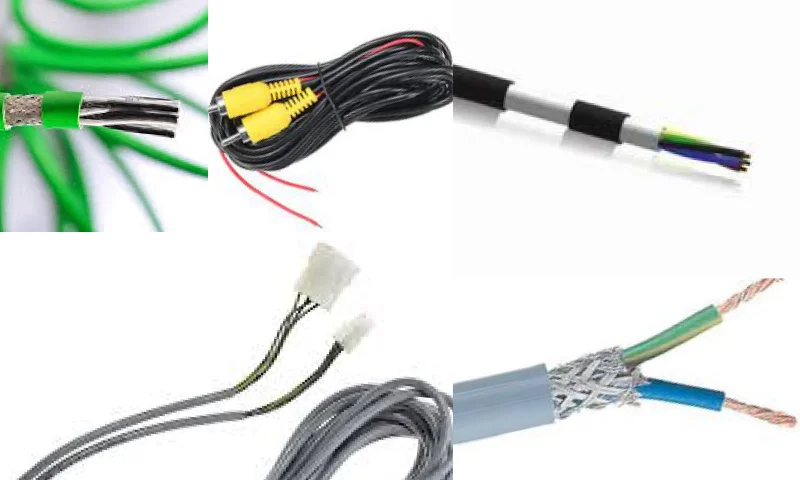
Just as in our bodies, the vessels and circulatory system that ensure the flow and distribution of blood, cables are responsible for ensuring the power current and distribution in the systems we use in our daily lives. You can examine more detailed information and cable selections regarding current carrying capacity from the pages. Although the external appearance of cables may not differ much in terms of thin – thick or color, their internal structures are designed quite differently from each other. For example, among cable varieties, there are cables with single-core conductors and multi-core (more than one thin wire) properties. Besides, in terms of internal content, cables have different properties made of copper or aluminum. The outside of the cables is covered with an insulating material. This internal content is one of the main themes that determine the power of cables in terms of current carrying capacity.
Cable Selection According to Environment
Cables vary according to their areas of use and are selected differently. The reason for this cable variety we listed above arises from these functionalities and the differences in their usage areas. In short, not every cable can be used in every area. Selecting cables with properties suitable for environmental conditions prevents possible accidents and loss of life and property. Cables often wear out due to heat and when chosen for the wrong area of use. In short, each cable has a different cable cross-section and current carrying capacity. For example, if the current passing through the selected cross-section is larger than its current carrying capacity, the cables will heat up and their insulation may burn. These melted cables can lead to flare-ups, fires, and even loss of life and property in spaces. Therefore, when selecting cables, their current carrying capacities must be considered. When selecting the cable cross-section, environmental conditions such as air, soil, and pipe usage should be taken into account. For example, the cable cross-section to be used in pipes or within channels in electrical panels should be selected in larger dimensions than the cable cross-section in the air. This is because cables passing through cable channels and pipes get hotter more quickly as they are multiple.





