
How Much Energy Does an Electric Hoist Remote Control Consume?
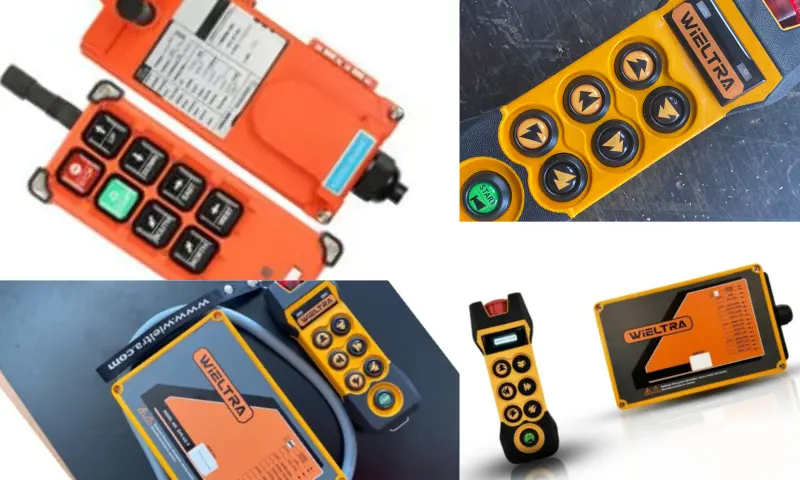
How to Increase Load Handling Safety with an Electric Hoist Remote Control?
Electric hoist remote controls are highly energy-efficient devices. These systems operate on low-voltage batteries or rechargeable batteries. The remote control unit itself consumes energy only when sending commands, not continuously. The remote's energy consumption depends on the type of battery used, signal strength, and duration of use. An average wireless hoist remote can operate for weeks without battery replacement, even when used actively for 8 hours a day. This indicates that energy consumption is at very low levels. For detailed information about electric hoist remote controls, you can visit the website https://www.wieltra.com/.
In Which Types of Hoists is an Electric Hoist Remote Control Preferred?
An electric hoist remote control significantly increases load handling safety. Firstly, since the operator controls the hoist from a distance, risks such as load dropping or swinging are minimized. This physical distance protects the operator from danger. With the emergency stop button found in modern remote controls, the hoist can be immediately disabled in potentially dangerous situations. Additionally, some systems provide warnings or automatically stop the system in case of load imbalance or excessive weight. Electric hoist remote controls can be used with a wide variety of hoist types. The most common applications include gantry cranes, overhead traveling cranes, monorail hoists, and fixed jib crane systems. In these hoists, where the operator's range of motion is limited, wireless control systems offer great convenience. These remote controls are also an ideal solution in situations where cable systems may be insufficient for cranes operating in open areas. The mobility provided by electric hoist remote controls is highly valuable in places such as shipbuilding, port logistics, and factory production lines. They are also preferred in compact hoist models as they save space. These systems, which can be programmed specifically for each hoist model, can be customized to suit the user's working conditions.





